Practical knowledge from Service Automation Suite.
Introduction to Service Automation Suite
How the platform fits together, how we work with it and how you can get started today.
On this page8 topics
Start with the bigger picture
Connect data, people and actions.
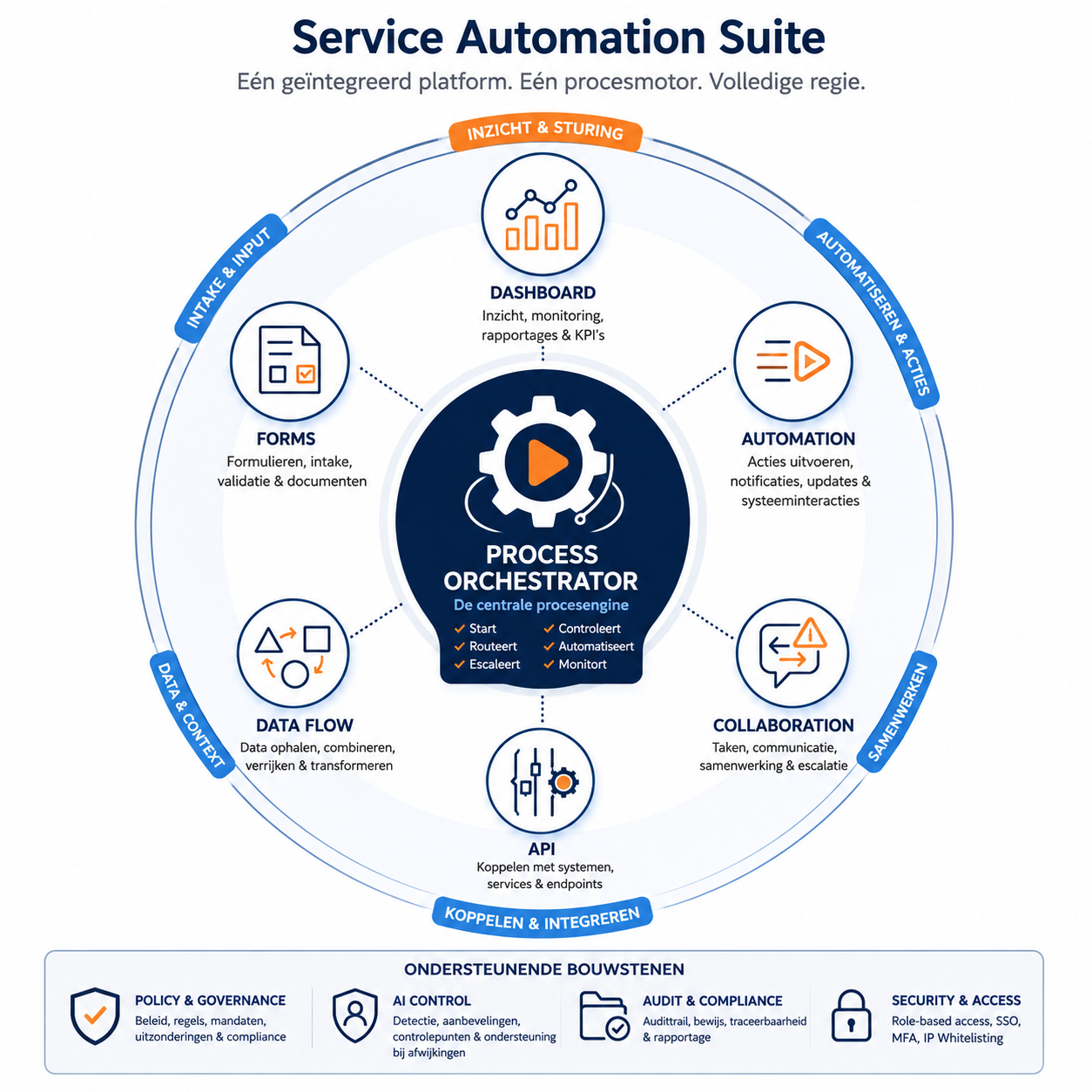
Service Automation Suite connects the work between applications. Retrieve data, make it usable, apply your rules and connect execution to feedback. People and applications each retain their own role in the process.
We work with reusable building blocks. Begin with a specific task or integration and reuse the connections, data and rules as you expand.
You can work with us today. The existing Composers provide practical capabilities for integration, data processing, endpoints and ticket integrations. Together we choose what fits your goal and environment.
How do we approach the work?
- Start with the task. Which request, change or action needs to work better? Agree the intended outcome and who is responsible.
- Connect the right data. Choose authoritative sources, match the same people or assets and decide which information the task requires.
- Configure execution. Combine system actions with human tasks and approvals. Define what happens when information is missing or an error occurs.
- Verify the outcome. A request being sent does not complete the task. Return confirmations, status and exceptions to where the work is followed.
Why use building blocks?
An application, supplier or way of working can change. Recognisable and reusable connections and process rules let you make targeted changes and test their impact. The relationships between the steps remain part of the design.
Our strength is combining a high-quality platform foundation with practical integration and process experience. For you, that means continuity, flexibility and room to adapt. Manage it yourself, work with us or use focused support when needed.
The platform behind the building blocks
Access and responsibility
Users, administrators and connected systems have appropriate roles. Access and ownership are part of the configuration.
Work and data
The Composers connect input, data transformation, system interaction and collaboration. Shared capabilities support logging, documents and feedback.
Operations and continuity
Monitoring, controlled changes, recovery and security are part of the platform approach and agreed services.
These functional layers support targeted changes while keeping their relationship with the wider process visible. This is our approach to a platform that can grow with new requirements and market changes.
Where are we today?
| Component | What you can work with |
|---|---|
| API Composer | Outgoing API requests, authentication, source fields and output. |
| Dataflow Composer | Combining and transforming data with functoids, preview and import. |
| Endpoint Composer | Exposing data and actions through configured endpoints. |
| Collaboration Composer | Ticket integrations and processing across connected systems. |
| Forms and Automation | Being developed from Qixium into Service Automation Suite; capabilities depend on your configuration and product version. |
| Process Orchestrator and central Dashboard | Part of the full platform model and in development. |
AI-ready support is a development direction. The current guides describe the existing Composers and their practical configuration. Your environment and agreements determine which modules and capabilities are available to you.
An example: a new colleague joins
The employee change comes from HR. Dataflow can combine and validate the data; APIs or a ticket integration connect the next steps. A responsible team approves a step or confirms an asset handover. Results and exceptions return to the agreed record.
The applications and steps depend on your situation. The example illustrates the approach: connect data, rules, actions and confirmation.
Where should you start in this wiki?
- Choose your first task: four practical routes to the right guide.
- Open the guides by Composer: quick start, tasks, configuration and operations together.
- Connections and communication: local systems, connectors and email.
- Support & service: help, status, service agreements, release information and security reporting.
Our perspective and choices
The building blocks are part of a wider context: freedom of choice, continuity and responsible use of AI. Explore how these principles shape development and collaboration.
Questions about your use case? Let us help.