DORA in practice: control over assets, access and follow-up
An up-to-date asset list is just the start. Connect workstations, servers, network equipment and identity lifecycles to checks and verifiable follow-up.

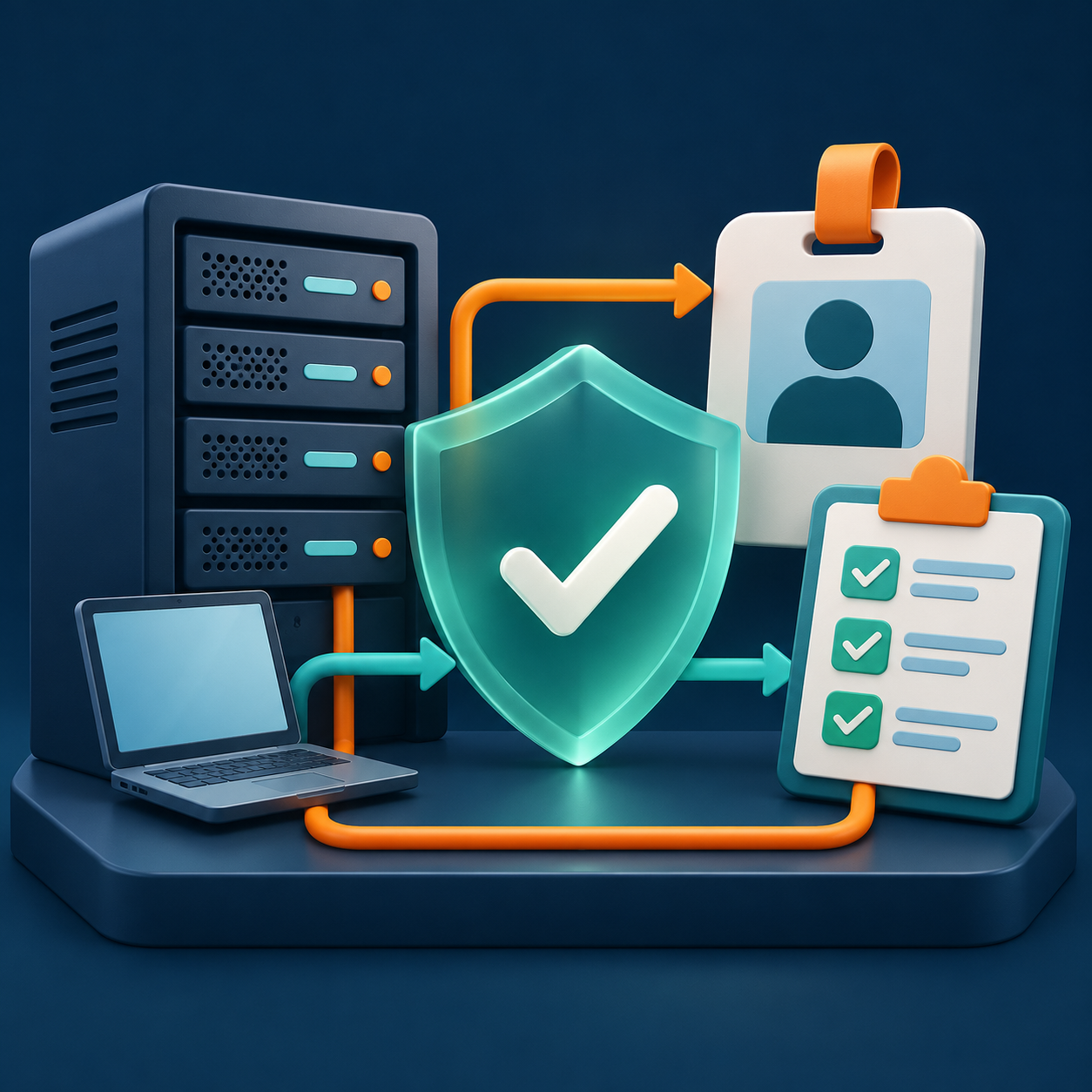
A laptop without an owner. A server falling outside management. An account still active after someone leaves. Digital resilience becomes tangible in everyday situations: knowing what you have, spotting deviations and showing what was done about them.
DORA has applied since 17 January 2025
The Digital Operational Resilience Act is an EU regulation for the financial sector. Since 17 January 2025, financial entities within its scope must meet the applicable requirements. These cover ICT risk, incidents, resilience testing and supplier risk. Implementation depends in part on the organisation and its risk profile. DNB explains the scope and themes. DORA is not a general obligation for every organisation using software.
From workstations to network equipment: an up-to-date view
The technical rules address the lifecycle of ICT assets: identifiers, owners, locations, supported services, dependencies and supplier support end dates. This concerns workstations, servers and network equipment. See Articles 4 and 5 of Regulation 2024/1774.
A practical starting point is reconciling the CMDB with the systems actually observing devices. Which device is missing? Which owner is unknown? Which difference needs investigation? Turn these gaps into assigned tasks and have someone verify the outcome.
Monitoring needs follow-up
DORA requires monitoring and timely detection of anomalies, with alert criteria and a route into incident handling. See DORA Articles 9 and 10. A dashboard alone does not demonstrate that a problem was resolved.
Respond proactively to monitoring signals: register an incident, link it to the affected asset and record its priority, owner, actions and recovery. Agree when follow-up or escalation is required so that anomalies do not remain unresolved.
Also include employee reports through a self-service portal (SSP), such as a lost or stolen laptop, phone or access card. Route each report to appropriate actions, such as blocking access, assessing data risks and updating the asset register. Record who did what and verify completion. Assess whether each report constitutes an ICT-related incident and which classification and reporting obligations apply. The AFM explains recording, classification and reporting.
The examples below suggest operational arrangements. Configuration and response times should reflect your risks and agreed services.
| Situation | Possible follow-up | What to record |
|---|---|---|
| Workstation missing from management | Reconcile source data with the asset register and ask an administrator to assess the gap. | Asset, owner, finding and outcome. |
| Server or network device reports an anomaly | Link the signal to the asset, set its priority and assign follow-up. | Incident record, priority, assigned action, recovery and verification. |
| Employee reports loss or theft through the SSP | Register the report, link the asset and follow up on blocking, investigation and any replacement. | Reporter, affected asset, time, assessment, actions and completion. |
| Employee changes role or leaves | Translate the change into agreed actions for access, accounts and equipment. | Approval, completed actions and outstanding exceptions. |
Joiners, movers and leavers: access follows the job
Identities and accounts also have a lifecycle: creation, change, review and termination. Technical Articles 20 and 21 address this, including withdrawal of unnecessary access without undue delay. Read the identity and access management rules.
You can connect an agreed HR source to tasks in IAM, directory services and TOPdesk. Verify execution too: was access actually changed, was equipment returned and which manual task is outstanding? Sending an instruction does not confirm completion.
What does this mean for suppliers such as Scope4mation?
Financial organisations need demonstrable arrangements with ICT suppliers covering services, data locations, security and incident assistance. Services supporting critical or important functions need additional provisions, including audit rights, continuity and exit. The AFM explains this distinction in supplier risk management.
For us, this means discussing the service, responsibilities and available evidence in concrete terms. The financial entity retains its own responsibility. Only specifically designated critical ICT providers fall under the special European oversight framework; this does not automatically apply to every software supplier.
Putting ISO 27001 and autonomy in context
ISO/IEC 27001 concerns information security management systems and risk management. ISO explains the standard and certification. A certificate within a defined scope does not, by itself, establish full DORA compliance.
For us, retaining control also means understanding data locations, dependencies and handover options. Make data export, documentation and exit arrangements specific. Choosing a Dutch supplier or European hosting does not by itself demonstrate DORA compliance.
Our Security & trust page provides the certificate and public security documents. Further supporting evidence is available through the Assurance Pack, subject to access review and an NDA where required. This supports supplier assessment; the agreed service and scope remain decisive.
The role of Service Automation Suite
Service Automation Suite connects data, agreements and actions across your applications. Monitoring stays with the systems configured for that purpose; Service Automation Suite can connect their findings and SSP reports to incident and asset records, assigned tasks, checks and feedback. Available sources and actions are agreed for each use case.
Start with one management question: which workstations are out of sight, which alerts lack follow-up or which leaver actions remain unconfirmed? Configure that route and make its outcome visible. Policies, risk decisions, testing and compliance assessment remain part of the organisation’s own responsibilities.
Where is the missing link between an asset, a signal and a completed action? Discuss a first step with Team Scope4mation →
More from the same context.

More control over your processes. Fewer separate tools.
Connect accounts, equipment, tasks and suppliers with Service Automation Suite. Make better use of existing applications and identify which separate tools you can retire.

Municipal processes under your control, with fewer disconnected tools.
Connect contractor flows, staff, access and equipment. Assess which functions Entra and Service Automation Suite can take over while keeping operations transferable.

Support healthcare staff with connected access, equipment and follow-up.
Connect staff, volunteers, locations and equipment. Assess where Entra and Service Automation Suite can reduce overlapping tools and handoffs.
Digital autonomy requires control. Why we support the VNG’s direction.
Retain freedom of choice over processes, data and technology. Why Scope4mation supports the VNG’s attention to digital autonomy and wants to contribute with customers and partners.